Engineering & technology00
Optimizing a Spark Gap Tesla Coil
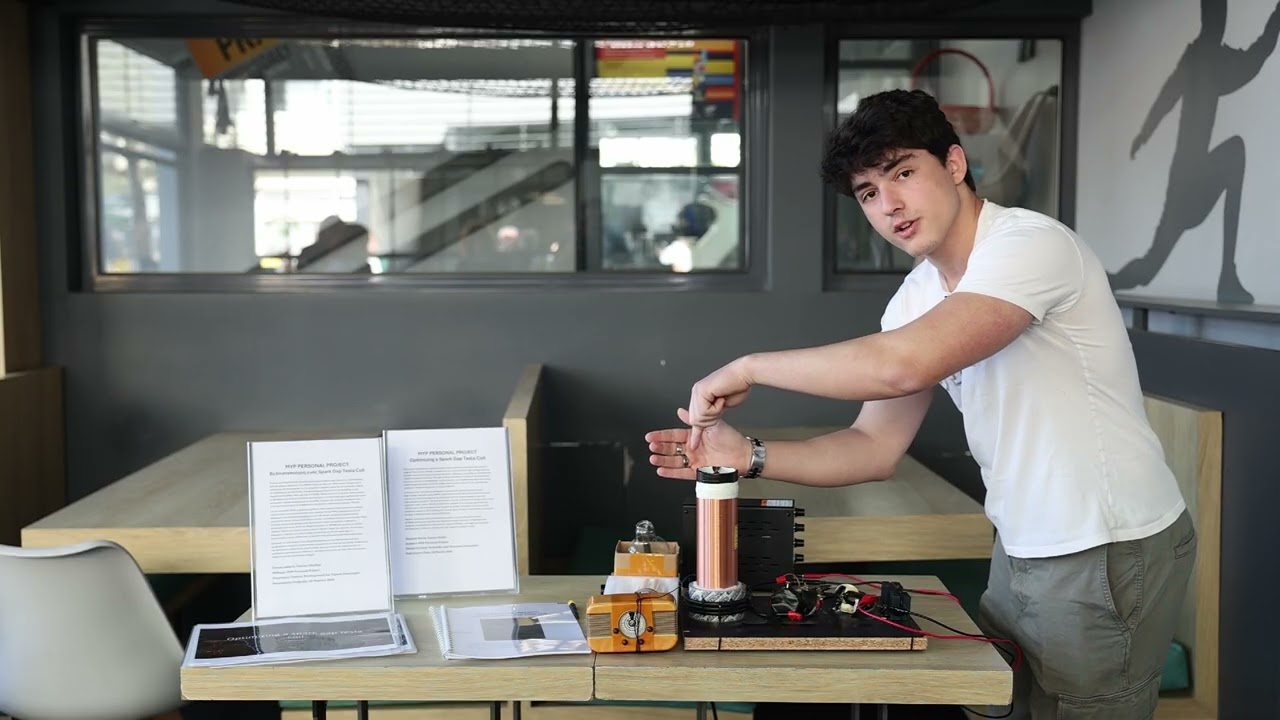
My MYP Personal Project: investigating and improving a spark-gap Tesla coil through research, prototypes, testing, and revision.
Tabletop electrostatic propulsion driven by a scrap-built ~12 kV DC power supply
A simple atmospheric ion thruster powered by ~12 kV DC from a self-resonating scrap transformer and a Cockcroft–Walton multiplier — strong enough to blow out a lighter flame.
01 / The question
An atmospheric ion engine produces thrust with no moving parts: a strong electric field at a sharp electrode ionizes the air, and the ions drifting toward the other electrode push air along with them, creating an "ionic wind".
I wanted to build one from what I had at hand, which meant designing the high-voltage supply myself.
03 / Iteration
A simple self-resonating circuit runs from 12 V DC and drives the primary of the step-up transformer.
I made the transformer from scrap parts; it steps the 12 V DC input up to roughly 3 kV AC.
A CW multiplier rectifies and multiplies the ~3 kV AC into roughly 12 kV DC.
The anode is a sharp needle from a syringe and the cathode is a small washer I found lying around.
05 / Evaluation
Voltages are approximate. High voltage is dangerous: this was a supervised, careful experiment and should not be copied without proper knowledge and precautions.
07 / Looking ahead
This build combined power electronics, transformer construction, and voltage multiplication into one working system — and made an invisible physical effect, ionic wind, directly visible.
A simple atmospheric ion engine running from a ~12 kV source. A self-resonating circuit drives a transformer I wound from scrap parts, stepping 12 V DC up to ~3 kV AC; a Cockcroft–Walton multiplier then turns that into ~12 kV DC. A syringe needle is the anode and a small washer is the cathode, and the setup produces enough thrust to blow out a lighter flame.
My MYP Personal Project: investigating and improving a spark-gap Tesla coil through research, prototypes, testing, and revision.
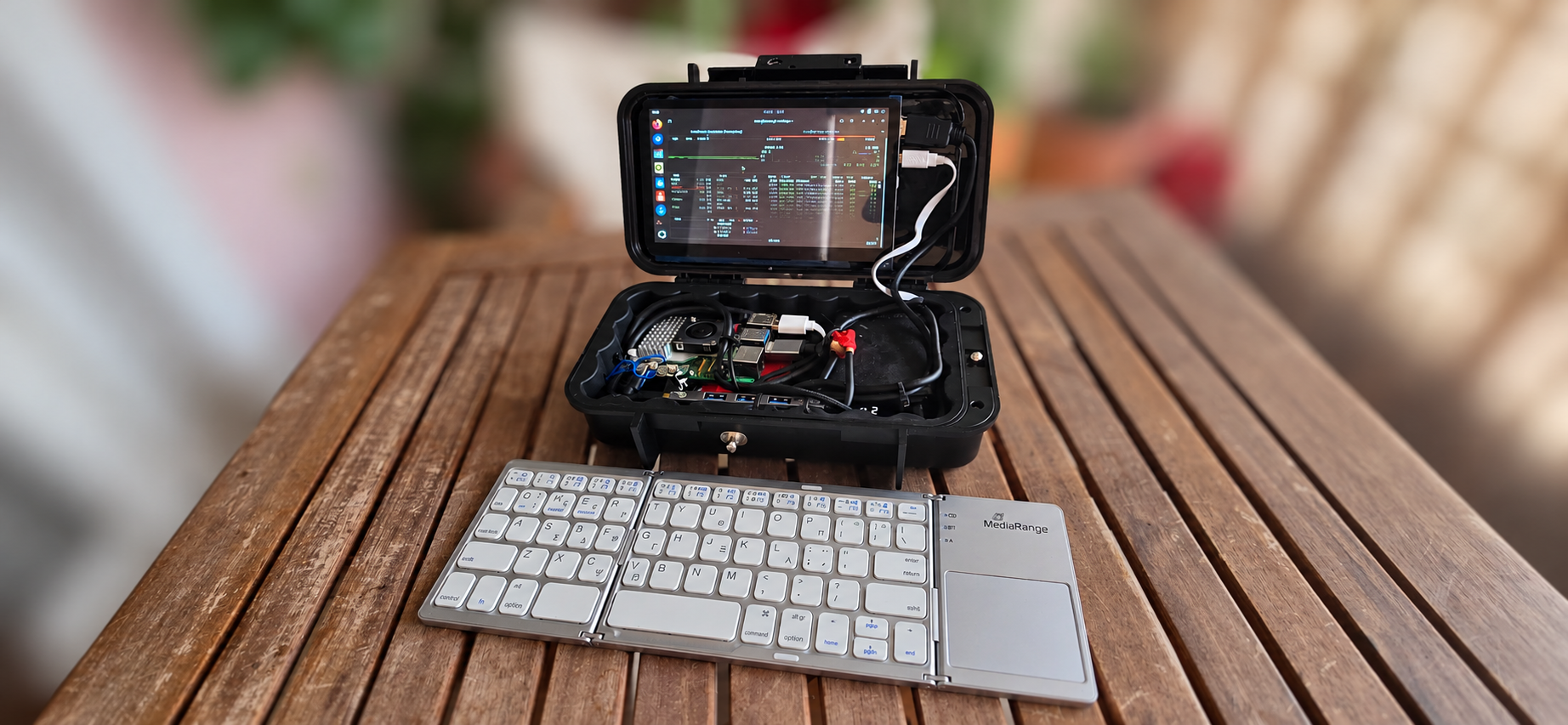
Built from a Raspberry Pi 5, a decased 2.5" SSD, a 7" display, and a rugged shell case running Ubuntu to keep up with schoolwork when my laptop died.
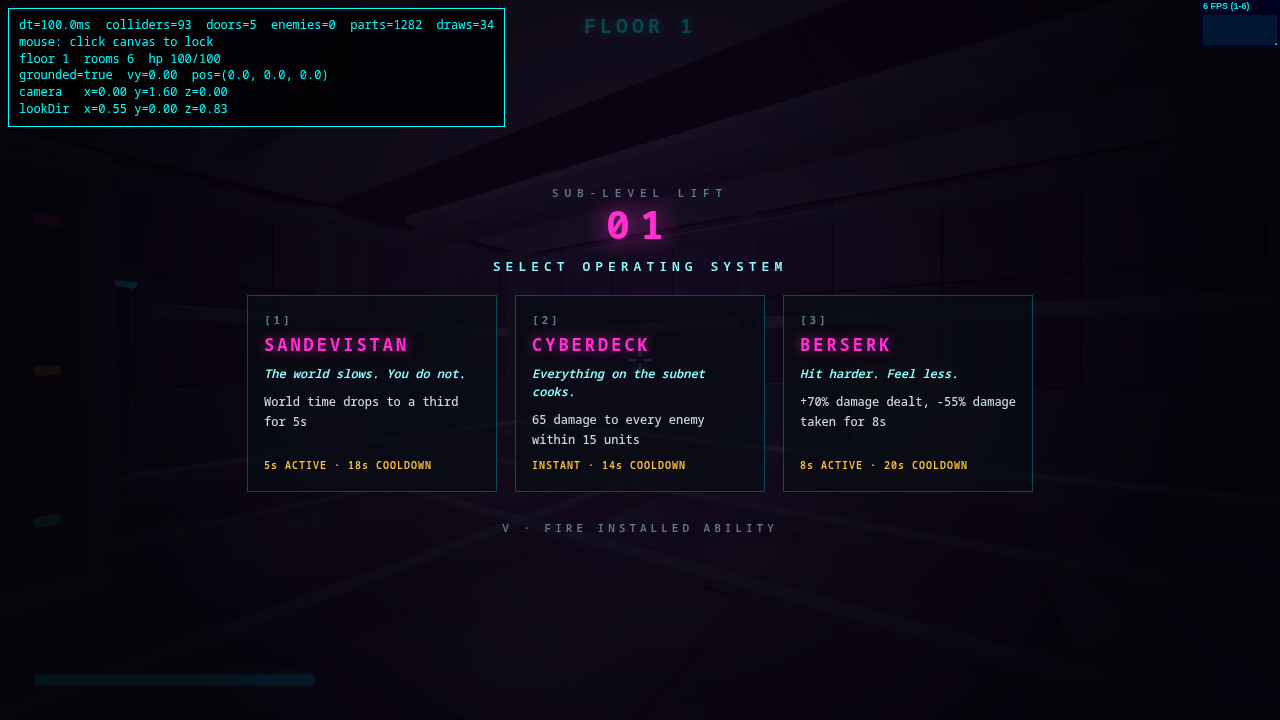
An infinite roguelike FPS in the browser, built with TypeScript, Three.js, and ECS — my first vibe coding experiment, made alongside Cline in VSCode.